
Introduction
You are halfway through a recipe and the measurements are not adding up. You have cups, but the recipe calls for ounces. Sound familiar? This small confusion has ruined more than a few baking sessions.
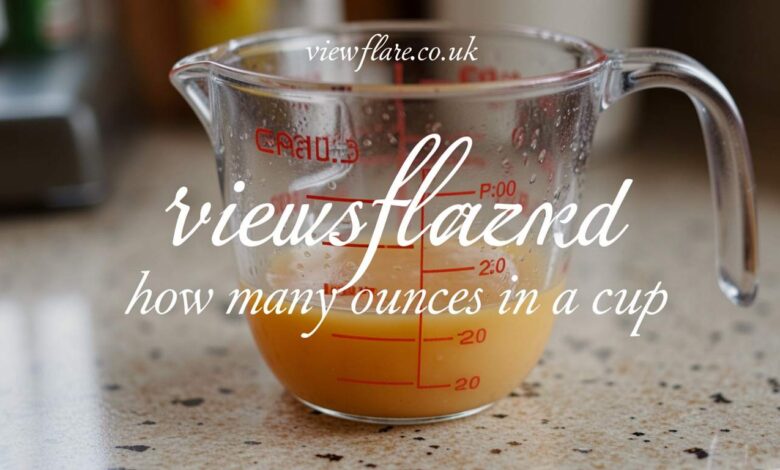
Knowing how many ounces in a cup is one of those kitchen facts that saves you every single time. Whether you are cooking, baking, or meal prepping, getting this right matters. And the answer is not always as simple as people think, because fluid ounces and dry ounces work differently.
In this article, you will learn the exact conversions for fluid ounces, dry ounces, half cups, double cups, and more. By the end, you will never need to Google this again.
How Many Ounces Are in 1 Cup?
The short answer: 1 cup holds 8 fluid ounces.
This is the standard measurement used in the United States. If you are following a US recipe, you can always count on 1 cup equaling 8 fluid ounces. It is a clean, consistent number that makes kitchen math easy.
Keep in mind this applies to the US customary system. Other countries use different cup sizes, which we will cover below.
Is 8 Ounces Equal to 1 Cup?
Yes, when you are talking about fluid ounces, 8 ounces equals exactly 1 cup. This is the measurement printed on most American measuring cups.
However, there is a catch. Not all cups around the world hold the same amount:
- US customary cup: 8 fluid ounces (236.6 ml)
- US legal cup (used in nutrition labeling): 8.12 fluid ounces (240 ml)
- Imperial cup (UK, older standard): 10 fluid ounces (284 ml)
- Metric cup (Australia, Canada): 8.45 fluid ounces (250 ml)
If you are cooking from a UK or Australian recipe, pay attention. The cup size is different, and that gap can throw off your measurements.
How Many Fluid Ounces Are in a US Cup?
A standard US cup contains exactly 8 fluid ounces. Fluid ounces measure volume, meaning they measure how much space a liquid takes up. This applies to water, milk, juice, oil, broth, and any other pourable liquid.
Here is a quick reference you can bookmark:
| Cups | Fluid Ounces |
|---|---|
| 1/4 cup | 2 fl oz |
| 1/3 cup | 2.67 fl oz |
| 1/2 cup | 4 fl oz |
| 3/4 cup | 6 fl oz |
| 1 cup | 8 fl oz |
| 2 cups | 16 fl oz |
These numbers are consistent and reliable for any US recipe you follow.
How Many Dry Ounces Are in a Cup?
This is where things get a little tricky. Dry ounces measure weight, not volume. Because different dry ingredients have different densities, the number of dry ounces in a cup varies by ingredient.
Here are some common examples:
- All-purpose flour: 1 cup = about 4.25 oz
- Granulated sugar: 1 cup = about 7 oz
- Brown sugar (packed): 1 cup = about 7.5 oz
- Butter: 1 cup = 8 oz
- Rice (uncooked): 1 cup = about 6.5 oz
- Rolled oats: 1 cup = about 3.5 oz
I always keep a small kitchen scale handy when I am baking. It takes the guesswork out of dry ingredient measurements and gives you much more consistent results.
Pro tip: Use a kitchen scale for dry ingredients when precision matters, especially for baking. A cup of flour scooped loosely versus packed tightly can vary by an ounce or more.
What Is the Difference Between Fluid Ounces and Ounces?
This is one of the most common points of confusion in the kitchen. Let us clear it up for good.
Fluid ounces (fl oz) measure volume. They tell you how much space a liquid occupies.
Dry ounces (oz) measure weight. They tell you how heavy something is.
Think of it this way: a cup of feathers and a cup of rocks both fill the same volume, but they weigh very different amounts. The same logic applies to ingredients.
When a recipe says “8 oz of cream cheese,” it means weight, not volume. When it says “8 fl oz of milk,” it means volume. Reading those labels correctly makes a real difference in your final dish.
Quick rule to remember:
- Liquids → use fluid ounces
- Solids and powders → use weight ounces (and ideally a scale)
How Many Ounces Are in Half a Cup?
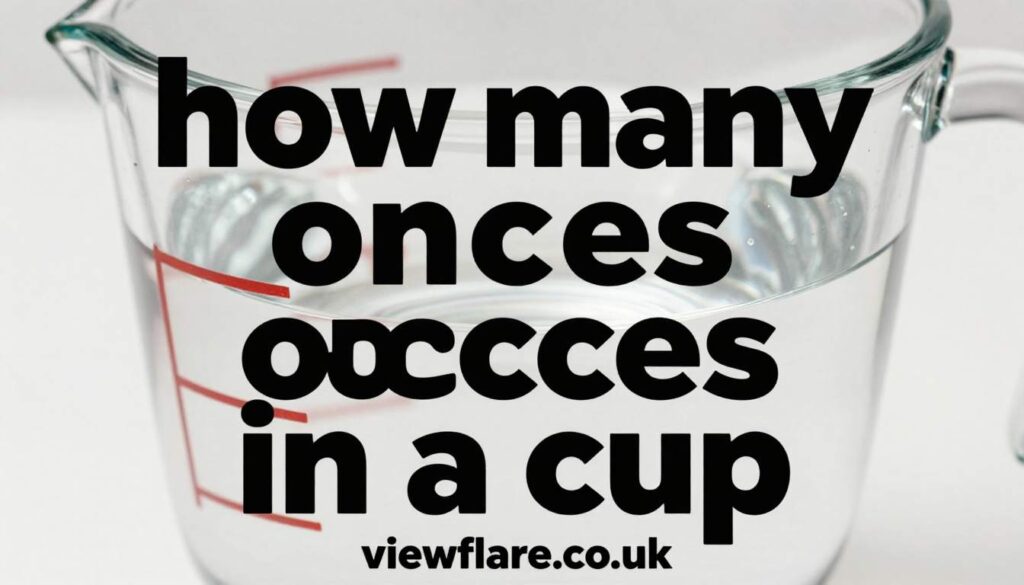
Half a cup equals 4 fluid ounces. This is one of the most useful how many ounces in a cup conversions to know, since so many recipes call for half cups.
Here is how it breaks down:
- 1/2 cup = 4 fluid ounces = 8 tablespoons
If you are without a half-cup measure, you can use 8 tablespoons instead. That gives you the same amount every time.
How Many Ounces Are in 2 Cups?
Two cups equals 16 fluid ounces. You will also see this written as 1 pint in many recipes.
Here is a broader scale so you can see how cups and ounces stack up:
- 2 cups = 16 fl oz = 1 pint
- 4 cups = 32 fl oz = 1 quart
- 16 cups = 128 fl oz = 1 gallon
These relationships make it easy to scale recipes up or down. If a recipe makes 2 cups and you want to double it, you know you need 32 fluid ounces.
How Many Cups Are in 16 Ounces?
Flip the question around and you get: 16 fluid ounces equals 2 cups.
This comes up often when you buy packaged ingredients. A 16 oz bottle of juice or broth is exactly 2 cups. You do not even need to measure it out separately.
Quick conversion for reference:
- 8 fl oz = 1 cup
- 16 fl oz = 2 cups
- 24 fl oz = 3 cups
- 32 fl oz = 4 cups
A Simple Way to Remember Cup to Ounce Conversions
Here is the trick I use to never forget this. Everything multiplies and divides cleanly by 8:
- 1 cup = 8 oz
- Multiply cups by 8 to get ounces
- Divide ounces by 8 to get cups
That formula works for every standard US conversion you will ever need in the kitchen.
Conclusion
Knowing how many ounces in a cup is one of those small things that makes cooking and baking so much smoother. To recap what you learned:
- 1 cup = 8 fluid ounces (US standard)
- Fluid ounces measure volume, dry ounces measure weight
- 1/2 cup = 4 fl oz, and 2 cups = 16 fl oz
- 16 ounces = 2 cups
- Dry ingredient weights vary, so a kitchen scale is your best friend
Now you have the numbers, the context, and the confidence to handle any recipe that mixes cups and ounces. Save this page, share it with a friend who always asks you this same question, or bookmark the conversion table for your next cooking session.
What recipe are you measuring for today? Let us know in the comments!
Frequently Asked Questions
Q1: How many ounces in a cup of water? 1 cup of water equals 8 fluid ounces. Since water has a density close to 1, it also weighs about 8.3 oz, but you typically measure it in fluid ounces.
Q2: How many ounces in a cup of milk? 1 cup of milk equals 8 fluid ounces. Milk is slightly denser than water, so it weighs around 8.6 oz by weight, but volume-wise it is still 8 fl oz.
Q3: How many ounces in a cup of coffee? A standard US cup holds 8 fluid ounces. However, many coffee makers use a “coffee cup” of 5 to 6 oz. Always check your coffee maker’s markings.
Q4: How many ounces in a cup of flour? About 4.25 dry ounces by weight. The number can vary depending on whether the flour is sifted or packed. For best results, weigh your flour.
Q5: Is a dry cup the same as a liquid cup? By volume, yes. Both hold 8 fluid ounces. The difference is in what you are measuring. Dry cups are designed for scooping and leveling, while liquid cups have a pour spout for accurate liquid measurement.
Q6: How many ounces in a cup of sugar? Granulated sugar weighs about 7 ounces per cup. Brown sugar comes in at about 7.5 oz per packed cup.
Q7: How many ounces in a cup of butter? 1 cup of butter equals 8 oz or 2 sticks of standard US butter.
Q8: How do you convert cups to ounces? Multiply the number of cups by 8 to get fluid ounces. For example, 3 cups x 8 = 24 fluid ounces.
Q9: How many cups is 32 ounces? 32 fluid ounces equals 4 cups, which is also 1 quart.
Q10: Does the type of liquid affect how many ounces are in a cup? For volume (fluid ounces), no. Any liquid fills a cup to the same volume. But if you are measuring by weight, denser liquids like honey or oil will weigh more than water per cup.
also read: viewflare.co.uk
email: johanharwen@314gmail.com
Author Name: Sarah Mitchell
Category: Food & Kitchen Tips / Cooking Conversions
About the Author : Sarah Mitchell is a home cook, recipe developer, and food writer with over 10 years of experience in the kitchen. She specializes in making cooking approachable for everyday people, covering everything from basic measurements to complex baking techniques. When she is not testing recipes, she is writing guides that help home cooks gain confidence and clarity in the kitchen. Follow her work for practical, no-nonsense cooking advice.