
Introduction
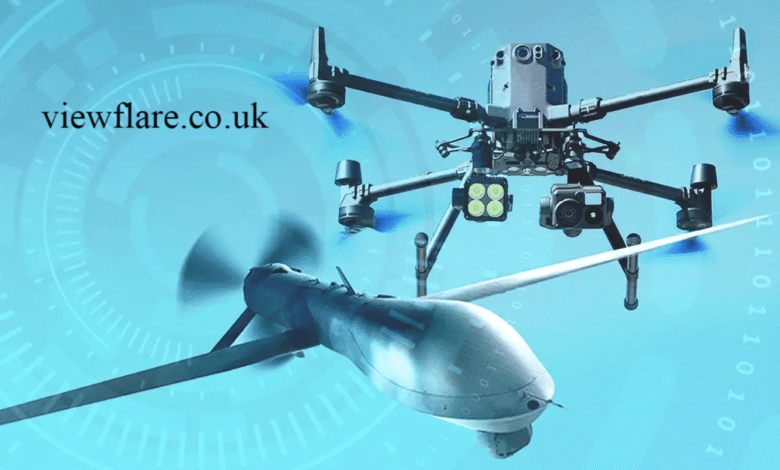
The technology of drones combines aircraft design, sensors, software, wireless communication, navigation systems and automated flight controls to operate an aircraft without a pilot sitting inside it. Also known as unmanned aerial vehicles, or UAVs, drones can be remotely controlled by an operator or designed to perform certain tasks with increasing levels of autonomy.
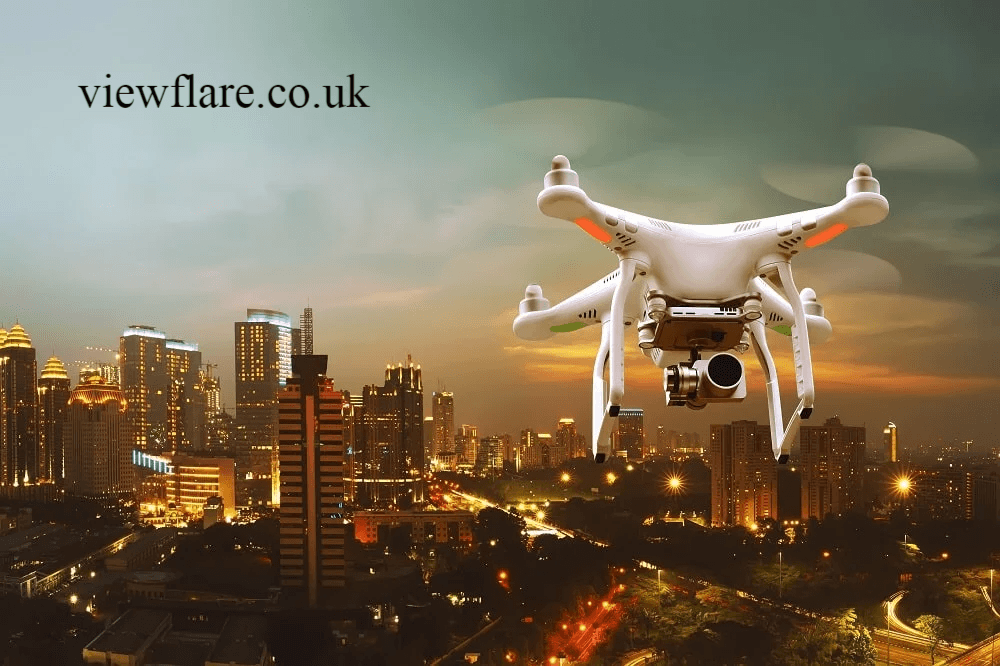
Modern drones range from small recreational aircraft to sophisticated systems used for photography, agriculture, mapping, infrastructure inspection, emergency response and scientific research. Their capabilities depend on the combination of hardware, software, sensors, communication links and payloads.
This guide explains how drones work, the main components behind drone flight, different types of UAVs, common applications, emerging AI technologies, benefits, challenges and important U.S. regulatory considerations.
What Is the Technology of Drones?
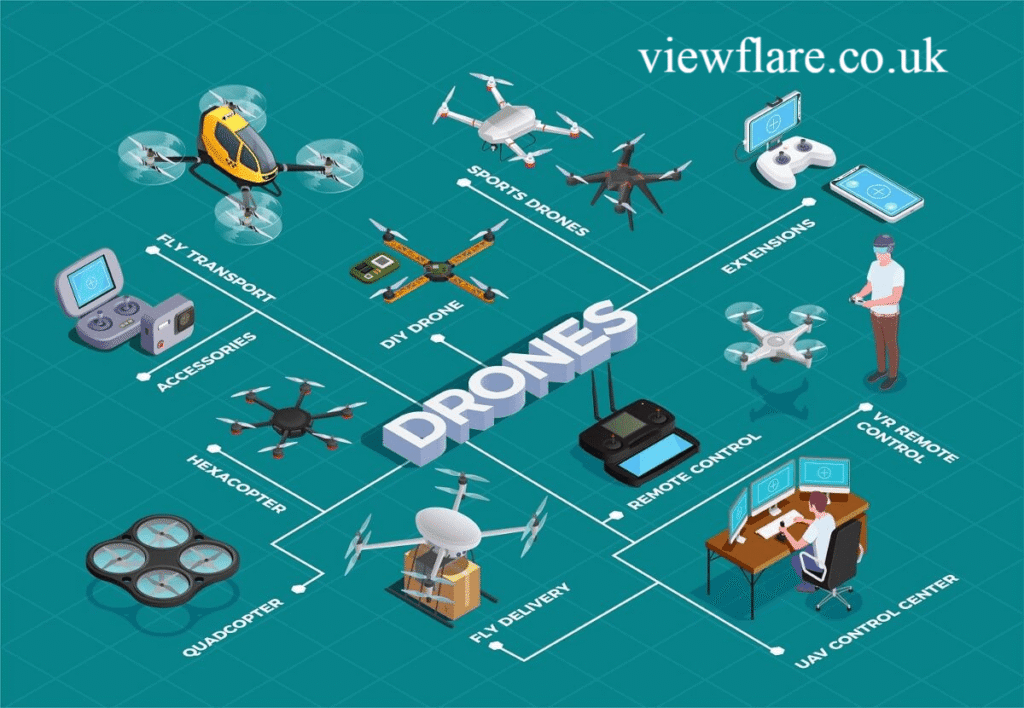
The technology of drones refers to the collection of mechanical, electronic and software systems that allow an unmanned aircraft to fly, navigate, communicate and complete a specific mission.
A typical drone system can include:
- Propellers and motors
- Batteries and power management
- Flight controllers
- GPS or other positioning systems
- Cameras and sensors
- Wireless communication systems
- Navigation software
- Ground control stations
- Mission and payload systems
In simple terms, the drone senses its environment, processes information, adjusts its flight and communicates with its operator or other systems.
How Do Drones Work?
Drones work by combining propulsion, flight control, navigation, communication and power systems.
For a multirotor drone, electric motors spin the propellers at controlled speeds. Changing the speed of individual motors allows the flight controller to control altitude, direction, rotation and stability.
Sensors continuously provide information about movement and orientation. The flight controller processes this information and sends commands to the motors. GPS or other positioning technologies can help the drone determine its location and follow a planned route.
A more advanced drone can also use cameras, obstacle detection sensors and onboard computing to make navigation decisions.
Core Components of a Drone
Propulsion System
The propulsion system creates the force needed for flight. Multirotor drones typically use electric motors and propellers, while fixed wing UAVs rely on wings to generate lift and may use a propeller or other propulsion method for forward movement.
The flight controller changes motor output to maintain stability and respond to pilot commands.
Power Management System
Most consumer and commercial electric drones use rechargeable batteries. The power system distributes electrical energy to motors, sensors, computers, communication equipment and other components.
Battery capacity affects flight time, payload capability and operating range. Efficient power management is therefore an important part of drone design.
Perception and Navigation System
A drone navigation system uses information from technologies such as GPS, inertial sensors, cameras and other sensing equipment.
Gyroscopes help measure rotational movement, while accelerometers measure changes in motion. More sophisticated drones can combine several sensors to improve positioning and environmental awareness.
This technology is particularly important for autonomous drones that need to follow routes or respond to changing conditions.
Flight Control System
The flight control system acts as the drone’s electronic decision center. It receives information from sensors and the pilot or mission software, then sends instructions to the propulsion system.
This allows the aircraft to maintain stability, change direction, adjust altitude and respond to commands.
Communication System
Drone communication allows information to move between the aircraft and the ground. Data links may transmit flight information, video, commands and other mission data.
A ground control station, often called a GCS, can provide operators with a view of the drone’s status and mission information.
How Do Drones Navigate and Maintain Flight?
Drone flight depends on continuous feedback.
The sensors measure factors such as orientation, movement and position. The flight controller compares this information with the desired flight path and makes adjustments.
For example, if a quadcopter begins tilting unexpectedly, its flight controller can change motor speeds to correct the movement. GPS can help maintain position outdoors, while other sensors can support navigation when GPS information is limited.
Advanced systems can combine several sources of information rather than depending on one sensor alone.
How Do Drones Communicate and Transmit Data?
Drones communicate through wireless data links that can carry control instructions and information back to the operator.
Depending on the aircraft and mission, communication may support:
- Live camera feeds
- Position information
- Flight status
- Navigation commands
- Sensor data
- Mission updates
- System alerts
A communication failure can create a significant operational challenge. For this reason, sophisticated drone systems can include procedures for events such as lost communication, including returning to a predefined location or entering another programmed state.
Main Types of Drones
Different drone designs are optimized for different jobs.
Multi Rotor Drones
Multirotor drones use several rotors and are common in consumer, commercial and professional applications. They can hover and maneuver vertically, making them useful for photography, inspection and surveying.
Single Rotor Drones
Single rotor UAVs resemble small helicopters. Their design can provide useful endurance and payload capabilities for certain specialized applications.
Fixed Wing Drones
Fixed wing drones resemble airplanes. Their wings generate lift during forward flight, allowing them to cover larger areas efficiently.
They are commonly suited to mapping, surveying, environmental monitoring and other missions that require longer coverage.
Hybrid VTOL Drones
Hybrid vertical takeoff and landing, or VTOL, aircraft combine characteristics of multirotor and fixed wing designs. They can take off vertically and then transition to efficient forward flight.
This makes them useful where operators need vertical takeoff capabilities combined with longer range or greater area coverage.
What Are Drones Used For?
Drone technology applications have expanded across many industries.
Photography and Videography
Drones can capture aerial images and video from viewpoints that would otherwise require aircraft, cranes or elevated platforms. They are widely used for filmmaking, real estate, inspections and outdoor events.
Agriculture
Agricultural drones can support crop monitoring, field surveying and other precision agriculture activities. Sensors can collect information that helps farmers understand field conditions and identify areas that require attention.
Delivery
Delivery drones are being developed and tested for transporting certain goods. The technology can potentially support faster movement of small packages in suitable locations.
Under U.S. Part 107 rules, certain commercial property transport operations are permitted when applicable requirements are met.
Search and Rescue
Emergency teams can use UAVs to survey difficult or dangerous areas without immediately sending personnel into those environments.
Thermal cameras and other sensors can provide additional information during certain search operations.
Mapping and 3D Modeling
Drones equipped with cameras or LiDAR sensors can collect aerial data for mapping and three dimensional modeling. These systems can support construction, surveying, environmental monitoring and infrastructure projects.
Wildlife Monitoring
Researchers and conservation teams can use drones to observe wildlife and collect information while reducing the need for people to travel through difficult terrain.
Surveillance and Inspection
Drones can inspect infrastructure such as buildings, towers, roofs, power equipment and other assets. They can also provide aerial observation for authorized public safety and security operations.
How AI Is Changing Drone Technology
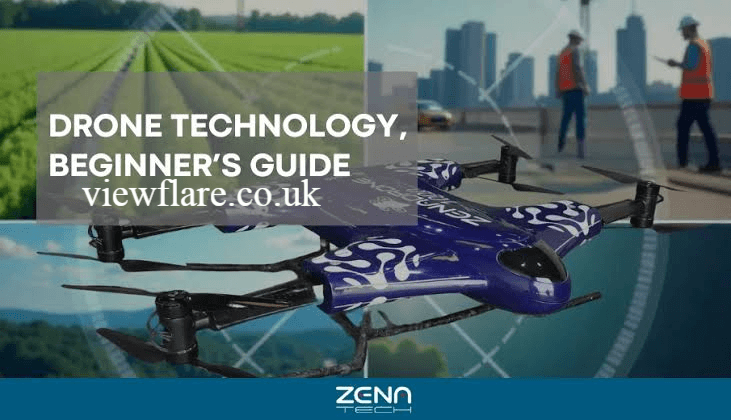
Artificial intelligence and machine learning are helping researchers develop more autonomous aircraft.
AI powered drones can process sensor information and support tasks such as object detection, route planning, obstacle awareness and automated decision making.
NASA research has explored autonomous systems capable of detecting and avoiding other aircraft and responding to emergency situations. NASA has also tested technologies that allow autonomous aircraft to identify safer landing locations during emergencies.
One important direction is the development of systems that can operate with less continuous human intervention while still maintaining appropriate safety controls.
Benefits of Drone Technology
The benefits of drone technology depend on the application, but common advantages include:
- Access to difficult or dangerous locations
- Faster aerial data collection
- Reduced need for manual inspection
- High resolution imaging
- Flexible monitoring
- Automation of repetitive tasks
- Potential improvements in operational efficiency
- Support for emergency response
The biggest value often comes from combining aerial mobility with specialized sensors and software.
Challenges and Limitations
Drones also have technical and operational limitations.
Battery powered aircraft may have limited flight time. Weather can affect performance. Wireless communication can be disrupted, and sensors may produce imperfect information.
Privacy is another important consideration because cameras and other sensors can collect information about people and property.
Autonomous operation also creates difficult safety questions. An autonomous aircraft needs reliable methods for detecting obstacles, responding to unexpected conditions and handling communication failures.
NASA research identifies sense and avoid capability, contingency response, reliability and safe integration into the national airspace as important challenges for autonomous unmanned aircraft.
Drone Regulations in the United States
Drone operators in the United States must follow FAA requirements applicable to their operation.
For small commercial UAS operations covered by Part 107, FAA rules include requirements related to registration, pilot certification, operating limitations and airspace. Part 107 generally covers drones weighing less than 55 pounds.
The FAA states that Part 107 operations generally require the drone to remain within the pilot’s visual line of sight, with specific rules governing altitude, speed, operations around people and other conditions. The standard maximum altitude is generally 400 feet above ground level, subject to applicable exceptions and rules.
Drone registration requirements also apply depending on the type of operation. The FAA states that drones generally must be registered, with an exception for certain recreational drones weighing 0.55 pounds or less. Registered drones are generally subject to Remote ID requirements unless an applicable exception applies.
Operators flying in controlled airspace may need FAA authorization. LAANC can provide near real time authorization for eligible operations in controlled airspace.
Because regulations can change, operators should check the FAA’s current guidance before every operation.
The Future of Drone Technology
The future of drone technology is moving toward greater autonomy, improved sensing, stronger connectivity and more specialized applications.
AI, computer vision, improved batteries, onboard computing and advanced navigation could allow drones to perform increasingly complex missions.
Potential future applications include automated infrastructure inspection, precision agriculture, emergency response, environmental monitoring and advanced air mobility.
The important development is not simply making drones fly farther or faster. The larger opportunity is creating systems that can understand their environment, make appropriate decisions and operate safely alongside people and other aircraft.
Conclusion
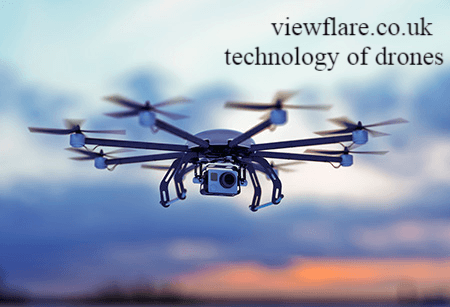
The technology of drones brings together aircraft engineering, propulsion, sensors, software, navigation and wireless communication in one compact system. These technologies allow UAVs to perform tasks ranging from aerial photography and mapping to agriculture, inspection and emergency response.
As AI and autonomous flight capabilities continue to develop, drones are becoming more capable and useful. At the same time, safety, privacy, cybersecurity, reliability and airspace integration remain essential considerations.
For anyone learning about drones, understanding the basic systems first provides a strong foundation for exploring more advanced areas such as autonomous flight, AI powered UAVs, drone swarms and commercial drone operations.
6. Custom FAQ Section
What Is a Technology of Drones PDF?
A technology of drones PDF is typically a downloadable educational document explaining subjects such as UAV definitions, drone components, flight principles, navigation, communication, applications and safety. For study purposes, look for PDFs from universities, government agencies, aviation organizations and reputable technical institutions.
What Are 5 Uses of Drones?
Five common uses of drones are:
- Aerial photography and videography
- Agriculture and crop monitoring
- Mapping and surveying
- Search and rescue
- Infrastructure inspection
Other applications include delivery, wildlife monitoring, environmental research and authorized surveillance.
Where Can I Find Fundamentals of Drone Technology PDF Resources?
Fundamentals of drone technology PDF resources can be found through reputable aviation authorities, universities, research institutions and technical organizations. Look for material covering propulsion, flight control, sensors, navigation, communication and UAV safety rather than relying only on general consumer guides.
What Are the Main Uses of Drone Technology?
Drone technology is used for aerial imaging, agriculture, mapping, surveying, inspection, emergency response, scientific research, wildlife monitoring, delivery and other specialized tasks. The exact application depends on the drone’s sensors, payload, flight characteristics and operating environment.
What Should I Know About Drones?
A drone is an aircraft that operates without a pilot onboard. It may be remotely controlled or capable of performing certain functions autonomously. Understanding its propulsion system, sensors, flight controller, navigation technology, communication link and applicable regulations is essential for understanding modern UAVs.
Author Bio: johan harwen is a technology writer focused on explaining complex subjects such as drones, AI, software and emerging technologies in simple language. His work helps readers understand technical concepts, real world applications and the latest developments in technology.
Email: johanharwen@314gmail.com
Author Name: Johan Harwen