

Technology is no longer limited to computers or smartphones. It is used everywhere, from hospitals and schools to factories, transportation networks, homes, and businesses. Technology applications are the practical ways people use scientific knowledge, digital systems, machines, software, and electronic devices to solve problems and make tasks more efficient.
From artificial intelligence and cloud computing to solar panels, GPS, medical diagnostics, and online learning platforms, modern technology applications affect how people communicate, work, learn, travel, and manage their health.
This guide explains the major types of technology applications, provides practical examples, and shows how different technologies are being used in the real world.
What Are Technology Applications?
Technology applications are practical uses of technology to perform tasks, solve problems, improve processes, or achieve specific goals. An application can be as simple as using a smartphone to send a message or as advanced as using machine learning to analyze medical images.
Technology can combine hardware, software, data, networks, and human processes. For example, a ride-sharing service may use smartphones, GPS, cloud computing, payment systems, databases, and artificial intelligence at the same time.
The important point is that technology itself is the tool or system, while its application describes how that technology is used.
Why Do Technology Applications Matter?

Well-designed technology can:
- Automate repetitive tasks
- Improve communication and information sharing
- Increase productivity
- Support faster decision-making
- Improve access to education and healthcare
- Reduce operational costs
- Help organizations analyze large amounts of data
- Improve energy generation and storage
- Make transportation safer and more efficient
- Enable new products and services
The value comes from solving a real problem rather than simply adopting the newest device or software.
Major Types of Technology Applications
Technology can be divided into several broad categories. Many modern systems overlap multiple categories, but these groups make it easier to understand where technology is being used.
1. Communication Technology
Communication technology helps people create, send, receive, and share information. It includes both traditional communication systems and modern internet-connected devices.
Common examples
- Smartphones and cell phones
- Internet services
- Television
- Video conferencing
- Messaging applications
- Social media platforms
- Voice and video communication
A smartphone, for example, combines communication technology with computer technology, cameras, GPS, software applications, and internet connectivity.
Communication technology has also transformed workplaces. Teams can collaborate through video meetings, instant messaging, shared documents, and cloud-based platforms without being in the same physical location.
2. Computer and Software Technology
Computers provide the processing power behind countless modern technology applications. Software tells computer systems what to do, while networks allow devices and services to exchange information.
Common applications include:
- Word processing
- Web browsing
- Data analysis
- Database management
- Graphic design
- Software development
- Business applications
- Gaming
- Cloud computing
Computers are also the foundation for advanced applications such as artificial intelligence, machine learning, robotics, and big-data analytics.
3. Artificial Intelligence and Machine Learning
Artificial intelligence enables computer systems to perform tasks that traditionally require aspects of human intelligence. Machine learning allows systems to identify patterns in data and improve their performance for particular tasks.
AI technology applications include:
- Search engines
- Chatbots
- Recommendation systems
- Voice assistants
- Fraud detection
- Image recognition
- Language translation
- Predictive analytics
- Personalized learning
- Medical image analysis
For example, businesses can use AI to identify patterns in customer behavior, while healthcare organizations can apply machine learning to assist with analysis of medical images.
AI is increasingly becoming a general-purpose technology layer that can be integrated into existing software rather than existing only as a standalone product.
4. Cloud Computing
Cloud computing provides access to computing resources, applications, and data over the internet.
Instead of depending entirely on computers and servers located on-site, organizations can use cloud services for:
- Data storage
- Software applications
- Website hosting
- Backup systems
- Computing power
- Collaboration
- Data analytics
- AI development
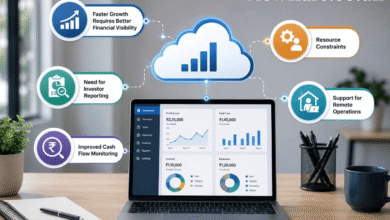
Cloud technology is particularly important for businesses because it can support remote work and allow organizations to scale computing resources according to their needs.
5. Business Technology Applications
Businesses use technology to automate operations, manage information, communicate with customers, and make decisions.
Important business technology systems include:
Enterprise Resource Planning
ERP systems connect business functions such as finance, inventory, purchasing, production, and operations.
Customer Relationship Management
CRM platforms help organizations manage customer information, sales activities, support interactions, and marketing campaigns.
Robotic Process Automation
RPA uses software robots to automate repetitive, rule-based tasks such as transferring information between systems, processing forms, or generating routine reports.
Business Intelligence
BI tools transform business data into dashboards, reports, and visualizations that can support decision-making.
Human Resource Management
HR software can help organizations manage recruitment, employee records, payroll processes, benefits, scheduling, and performance information.
Together, these technology applications can create more connected and data-driven business processes.
6. Education and Learning Technology
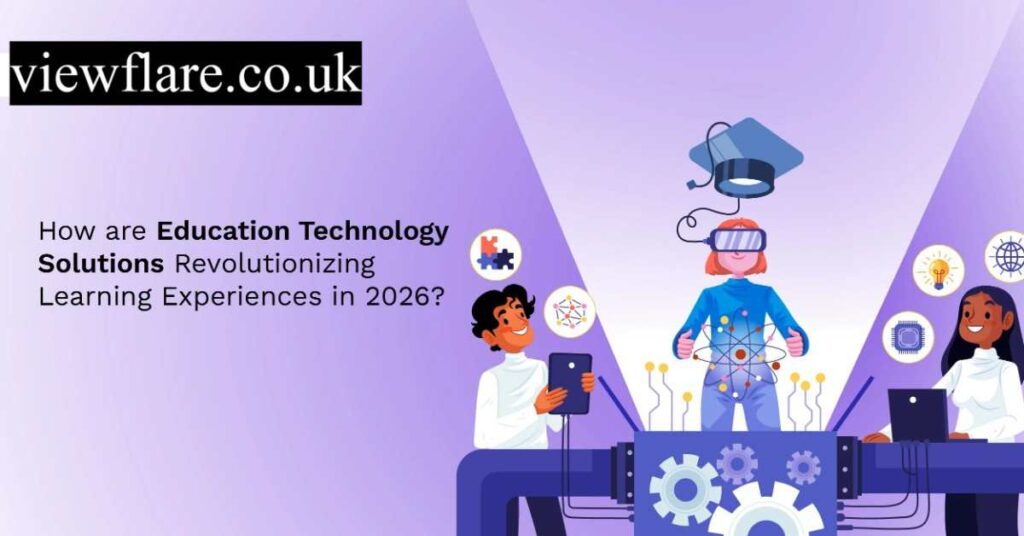
Education technology helps students and teachers access learning resources, communicate, practice skills, and manage educational activities.
Technology applications in education include:
- Online learning platforms
- Virtual classrooms
- Educational applications
- Digital textbooks
- Learning management systems
- Video lessons
- Interactive simulations
- Online assessments
- AI-assisted learning tools
For students, technology can make educational material available beyond the traditional classroom. Teachers can also use digital tools to organize lessons, distribute resources, assess work, and communicate with students.
Technology Applications Class
A technology applications class typically teaches students how to use technology to solve practical problems. Depending on the course, students may learn computer applications, programming, digital design, productivity software, information systems, or emerging technologies.
The exact curriculum varies by school, college, or training provider.
7. Healthcare and Medical Technology
Medical technology applies scientific and engineering knowledge to diagnosis, treatment, monitoring, prevention, and patient care.
Examples include:
- X-ray machines
- MRI systems
- Ultrasound equipment
- Digital thermometers
- Patient monitoring devices
- Wearable health devices
- Surgical robotics
- Laboratory equipment
- Electronic health systems
- Drug-development technologies
Diagnostic technology can help healthcare professionals gather information about a patient’s condition, while monitoring devices can continuously track measurements such as heart rate.
AI and data analytics are also increasingly used to support medical research, clinical workflows, and analysis of complex datasets.
8. Energy Technology
Energy technology focuses on generating, storing, converting, and transmitting energy.
Solar panels
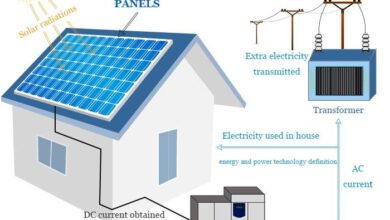
Solar panels convert sunlight into electrical energy and are widely used in residential, commercial, and utility-scale installations.
Wind turbines
Wind turbines convert the kinetic energy of moving air into electricity.
Batteries
Batteries store electrical energy for later use. They are important in smartphones, electric vehicles, renewable energy systems, and backup power applications.
Renewable energy technology is particularly important as countries and organizations work to increase cleaner energy generation and improve energy-storage capabilities.
9. Manufacturing and Mechanical Technology
Manufacturing technology helps organizations produce goods efficiently, consistently, and safely.
Examples include:
- Industrial robots
- Automated assembly systems
- Computer-controlled machinery
- Sensors
- 3D printing
- Predictive maintenance systems
- Industrial automation
- Computer-aided manufacturing
Robotics and automation can perform repetitive or hazardous tasks, while sensors and data analytics can help manufacturers identify equipment problems before they cause major disruptions.
Modern factories increasingly combine mechanical systems with software, connectivity, AI, and data analytics.
10. Transportation Technology
Transportation technology helps people and goods move more safely, efficiently, and reliably.
Major examples include:
GPS and Navigation
GPS uses satellite signals to help determine location. Navigation systems combine location information with maps and other data to provide directions.
Flight Technology
Modern aircraft use sophisticated navigation, communication, radar, control, and safety systems.
Electric Vehicles
EVs use electric motors and batteries instead of conventional internal-combustion powertrains.
Connected Vehicles
Connected vehicles can communicate with digital systems to provide navigation, diagnostics, entertainment, safety, and other services.
Autonomous Driving
Autonomous-driving technologies use combinations of sensors, software, computing, and AI to perceive surroundings and support automated driving functions.
These examples show how transportation increasingly depends on the integration of mechanical, electrical, software, communication, and AI technologies.
11. Security and Cybersecurity Technology
As organizations become increasingly dependent on digital systems, cybersecurity has become an essential technology application.
Security technologies can include:
- Firewalls
- Encryption
- Multi-factor authentication
- Endpoint protection
- Identity and access management
- Security monitoring
- Intrusion detection
- Backup and recovery systems
The purpose is to protect systems, networks, applications, and information from unauthorized access, disruption, manipulation, or loss.
Good cybersecurity is not just about installing security software. It also involves policies, employee awareness, access controls, monitoring, updates, and recovery planning.
12. Audio, Visual, and Digital Media Technology
Audio and visual technology allows people to capture, process, store, transmit, and display sound and images.
Examples include:
- Digital cameras
- Microphones
- Projectors
- Speakers
- Video production systems
- Streaming technology
- Virtual reality devices
- Augmented reality systems
These technologies are used in entertainment, education, advertising, journalism, business presentations, gaming, and social media.
13. Technology Applications in Everyday Life
You may use dozens of technology applications without thinking about them as technology.
For example, a typical day might involve:
- Using a smartphone alarm to wake up.
- Checking weather information through an internet-connected app.
- Using GPS to navigate to work or school.
- Paying for goods using a digital payment service.
- Communicating through messaging or video calls.
- Using streaming services for entertainment.
- Tracking exercise or sleep with a wearable device.
- Using online banking to manage finances.
- Ordering products through an e-commerce platform.
- Using cloud services to store photos or documents.
This illustrates an important concept: technology applications often work together rather than operating independently.
14. Emerging Technology Applications
Emerging technologies continue to expand what digital and physical systems can do.
Some important areas include:
- Generative AI
- Advanced robotics
- Internet of Things (IoT)
- Edge computing
- Autonomous systems
- Extended reality
- Advanced battery technologies
- Smart manufacturing
- Digital twins
- Quantum computing
Not every emerging technology will become mainstream. Businesses and consumers should evaluate new technology based on its practical value, reliability, security, cost, and suitability for the problem it is intended to solve.
How to Choose the Right Technology Application
The best technology is not necessarily the newest technology. Before adopting a tool or system, consider the actual problem you want to solve.
Ask:
- What problem will this technology solve?
- Who will use it?
- Does it integrate with existing systems?
- How much will implementation and maintenance cost?
- What data will it collect?
- How will that data be protected?
- Can employees or users learn to use it easily?
- Can the technology scale as needs change?
- What measurable benefit should it provide?
A simple, reliable solution can sometimes deliver more value than an advanced system that is difficult to operate or maintain.
Benefits and Challenges of Technology Applications
Technology can produce significant benefits, but implementation also introduces challenges.
| Benefits | Potential Challenges |
|---|---|
| Higher productivity | Implementation costs |
| Faster communication | Cybersecurity risks |
| Better data analysis | Privacy concerns |
| Process automation | Training requirements |
| Improved accessibility | Technical failures |
| Better healthcare capabilities | Digital inequality |
| Faster information sharing | Overdependence on technology |
| More efficient operations | Maintenance and upgrades |
The goal should therefore be responsible technology adoption. Organizations and individuals need to consider security, privacy, accessibility, cost, sustainability, and long-term usability alongside performance.
Frequently Asked Questions
What are technology applications examples?
Technology application examples include smartphones for communication, GPS for navigation, cloud computing for online data storage, AI for automated analysis, solar panels for electricity generation, medical devices for patient monitoring, and robotics for manufacturing.
What is a technology applications class?
A technology applications class teaches students how technology can be used for practical tasks and problem-solving. Depending on the course, it may cover computer applications, software, programming, digital design, information systems, or other technology skills.
Where can I find technology applications PDFs?
Technology applications PDFs may include textbooks, course notes, guides, research papers, or educational resources. When using a PDF for study, check the publisher, institution, publication date, and author to determine whether the material is reliable and current.
What are technology applications for students?
Technology applications for students include online learning platforms, educational software, digital libraries, word processors, presentation tools, collaboration platforms, coding environments, research databases, and AI-assisted study tools. These applications can support learning when students use them responsibly and verify important information.
What are technology applications in education?
Technology applications in education include learning management systems, virtual classrooms, educational apps, digital textbooks, video lessons, online assessments, interactive simulations, accessibility tools, and AI-based learning systems. They can help teachers deliver content and give students more flexible ways to learn.
Conclusion
Technology applications are the practical uses of technology to solve problems, improve efficiency, communicate information, and support human activities. They range from familiar tools such as smartphones and computers to specialized systems used in healthcare, manufacturing, renewable energy, transportation, cybersecurity, and education.
Understanding the different types of technology helps you recognize how these systems work together. As artificial intelligence, cloud computing, automation, connected devices, and renewable energy continue to develop, technology applications will likely become even more integrated into everyday life and the workplace.
The most valuable approach is not simply adopting more technology. It is choosing the right technology for the right problem, while considering usability, security, cost, accessibility, and long-term benefits.
Author Bio: Johan Harwen is a technology and digital trends writer who explores emerging technologies, practical applications, and innovations shaping everyday life. His work focuses on making complex technology topics clear, useful, and easy for readers to understand.
Email: johanharwen@314gmail.com
Author Name: Johan Harwen