


A blog business plan gives your website a clear purpose instead of leaving content creation to chance. It helps you decide who you want to reach, what you will publish, how you will attract visitors, how the blog can generate revenue, and which results you need to track.
You do not need a complicated corporate document. A useful business plan for a blog can be a simple working document that connects your goals, audience, content strategy, marketing plan, and business objectives.
Whether you are starting a new website or adding a blog to an existing business website, the following seven steps can help you create a practical plan that you can actually use.
What Is a Blog Business Plan and Why Do You Need One?
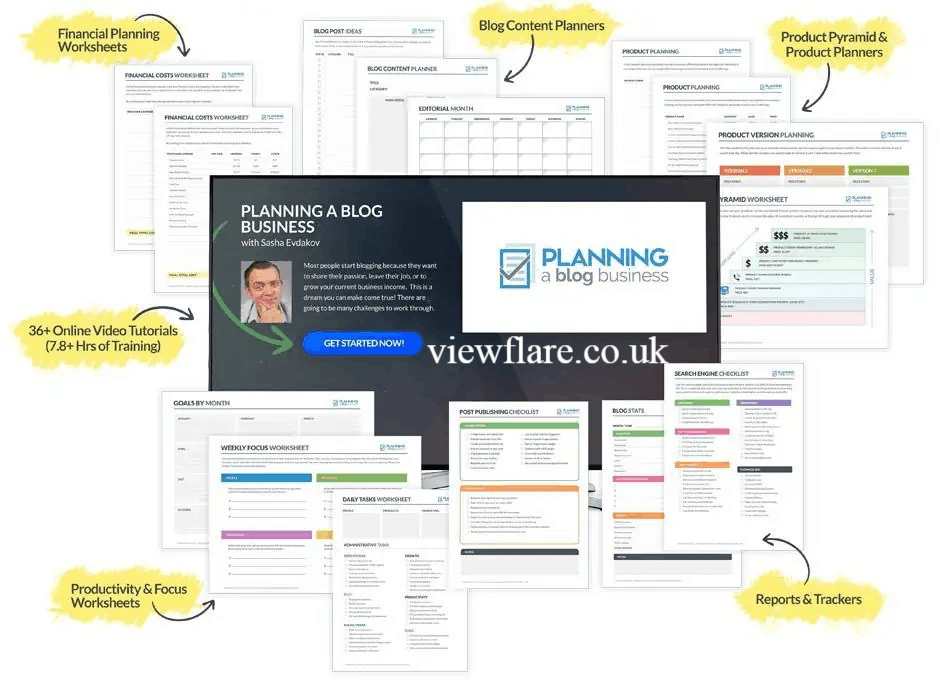
A blog business plan is a roadmap that explains how your blog will create value for readers and support your broader business goals.
A good plan normally covers:
- Your blog’s purpose and intent
- Your target audience
- Your niche and topics
- Your content strategy
- Your publishing schedule
- Your traffic generation methods
- Your monetization model
- Your marketing activities
- Your performance metrics
- Your long term growth goals
The biggest benefit is focus. Instead of publishing random articles because a topic happens to be popular, you can evaluate every content idea against your business objectives.
Google’s current guidance also emphasizes creating useful, reliable content primarily for people rather than producing content simply to manipulate search rankings.
1. Define Your Blog Goals and Business Objectives
Start by deciding what success means for your blog.
Your blog goal should be specific enough to guide your decisions. For example, you might want to:
- Generate qualified leads
- Promote products or services
- Build brand authority
- Grow an email list
- Earn affiliate revenue
- Generate advertising income
- Educate potential customers
- Increase organic search traffic
- Build a loyal audience
Think about the difference between blog intent and a call to action. Your intent explains what the blog should accomplish for your business. Your CTA explains what you want readers to do next.
For example, a consulting company may use educational articles to establish authority. Its CTA could encourage readers to schedule a consultation.
Set Measurable Blogging Goals
Avoid vague goals such as “make my blog successful.”
Instead, define measurable targets such as:
| Goal | Example Measurement |
|---|---|
| Grow traffic | Organic visits |
| Generate leads | Form submissions |
| Build an audience | Email subscribers |
| Increase sales | Blog assisted conversions |
| Build authority | Relevant backlinks and brand mentions |
| Improve engagement | Engagement rate and returning visitors |
Your goals can change as the blog develops. Review them regularly instead of treating the original plan as permanent.
2. Identify Your Niche and Target Audience
A strong blog needs a clear audience.
Your target audience should not simply be “everyone who uses the internet.” Define the people most likely to benefit from your content or eventually buy what you offer.
Consider:
- Age and location where relevant
- Job or business type
- Knowledge level
- Common problems
- Buying motivations
- Questions they ask
- Products or services they already use
- Their preferred content formats
Creating a simple customer profile can make content planning much easier.
For example, instead of targeting “small businesses,” you could target owners of service based businesses who need affordable marketing strategies and practical website advice.
Match Content With Audience Needs
Your blog should provide information that solves real problems.
Useful content may be:
- Educational
- Inspirational
- Entertaining
- Product focused
- Comparison based
- Tutorial driven
- Research based
- Problem solving
The strongest topics usually sit where your audience’s interests overlap with your business expertise.
3. Build a Content and SEO Strategy
Once you know your audience, decide what you will publish.
Your blog content plan should organize topics into logical groups rather than treating every article as an isolated page.
Start with several main content categories and create supporting articles around each one.
For example, a digital marketing blog could cover:
- SEO
- Content marketing
- Email marketing
- Social media
- Analytics
- Small business marketing
This creates a stronger blog structure and makes internal linking easier.
Create Search Focused Content

SEO should support your content rather than control it.
For each article, identify:
- The main search intent
- Important questions readers want answered
- Relevant related terms
- Useful examples
- Internal links to related content
- A clear next step for the reader
Do not create articles simply by inserting keywords repeatedly. Google’s spam policies specifically address attempts to manipulate search systems, including low value content created primarily for rankings.
A better approach is to create genuinely useful pages that answer the topic thoroughly and clearly.
4. Decide How Your Blog Will Make Money
A blog business plan should explain how the website can support revenue.
Your monetization model depends on your niche, audience, expertise, and business model.
Common options include:
- Display advertising
- Affiliate marketing
- Digital products
- Online courses
- Consulting
- Freelance services
- Sponsored content
- Memberships
- Physical products
- Lead generation
You do not need to use every model.
For example, a professional service business may generate more value from qualified leads than from advertising. An informational website with large search traffic may have more opportunities for advertising or affiliate marketing.
Choose the model that makes sense for your audience rather than adding monetization methods simply because other blogs use them.
5. Create a Blog Marketing and Traffic Plan
Publishing content is only one part of building a successful blog. You also need a blog marketing strategy for getting your content in front of the right people.
Your traffic plan may include:
Organic Search
Create useful, search focused content around topics your audience actually searches for. Organize related articles into content clusters and connect them with relevant internal links.
Email Marketing
Encourage readers to join your email list through useful resources, newsletters, checklists, or an ebook download.
An email list gives you a direct communication channel that does not depend entirely on search algorithms or social platforms.
Social Media
Share useful content where your target audience spends time. Your social strategy can include educational posts, short videos, discussions, visual content, and links to detailed articles.
Guest Contributions
Relevant guest blogging can introduce your expertise to another audience and help establish authority when done for genuine audience value.
Community Participation
Participate in relevant online communities by answering questions and providing useful information. Avoid dropping promotional links where they are not wanted.
The goal of blog promotion should be to build relationships and attract qualified visitors, not simply produce as many clicks as possible.
6. Create a Publishing Workflow

A blog becomes much easier to manage when you have a repeatable process.
Your workflow might look like this:
Research → Outline → Write → Edit → Optimize → Publish → Promote → Measure → Update
Set a realistic posting frequency based on your available resources.
Publishing one excellent article every week can be more sustainable than publishing five rushed articles and then disappearing for several months.
Your workflow should also answer:
- Who researches topics?
- Who writes the content?
- Who edits it?
- Who creates images?
- Who publishes it?
- Who promotes it?
- Who checks performance?
- When should old content be updated?
If you work alone, you can handle every stage yourself. As the blog grows, you may decide to outsource editing, design, research, or other repetitive tasks.
7. Track Performance and Improve Your Strategy
A blog business plan should never be a document that you create once and forget.
Use blog performance metrics to understand what is working.
Useful measurements include:
- Organic traffic
- Search impressions
- Click through rate
- Email subscribers
- Leads
- Sales
- Conversion rate
- Returning visitors
- Engagement
- Top performing pages
- Underperforming pages
Google Search can also provide useful information about how your pages appear and perform in search. Structured data can help Google understand the content and context of eligible pages, although structured data does not guarantee a particular search appearance.
Update What Already Works
Do not focus exclusively on creating new content.
If an older article already attracts visitors, consider whether it needs:
- Updated information
- Better examples
- New sections
- Improved internal links
- Clearer answers
- Updated images
- A stronger CTA
This creates a continuous improvement cycle for your blog.
Simple Blog Business Plan Template
You can use this basic structure as a starting point:
| Section | What to Include |
|---|---|
| Blog purpose | Why the blog exists |
| Niche | Main subject and content categories |
| Target audience | Who you want to reach |
| Goals | Traffic, leads, sales, subscribers, or authority |
| Content strategy | Topics, formats, and search intent |
| Publishing plan | Posting frequency and workflow |
| Marketing | SEO, email, social media, communities |
| Monetization | How the blog will generate revenue |
| Metrics | Measurements used to evaluate performance |
| Growth plan | What you will improve over the next 6 to 12 months |
This template can be expanded as your website grows. The important thing is to make the plan practical enough that you will actually use it.
Blog Business Plan Example
Imagine you are creating a blog for a small accounting firm.
Your plan could look like this:
Purpose: Educate small business owners about accounting and financial management.
Audience: US based small business owners who need practical accounting guidance.
Content: Tax preparation basics, bookkeeping, cash flow, accounting software, business expenses, and financial planning.
Marketing: Organic search, email marketing, professional social media content, and partnerships.
Monetization: Generate qualified consultation leads for accounting services.
CTA: Encourage readers to schedule a consultation or download a useful financial checklist.
Metrics: Organic traffic, consultation requests, email subscribers, and leads generated from content.
This example shows why a blog does not necessarily need to become a separate business. It can operate as an important marketing and customer acquisition channel for an existing company.
How to Make Your Blog Business Plan Work

A plan only becomes valuable when you use it to make decisions.
Before publishing a new article, ask:
- Does this topic serve my target audience?
- Does it support one of my blog goals?
- Does it match my content strategy?
- Does it solve a genuine problem?
- Is the search intent clear?
- Does it connect naturally with existing content?
- What action should readers take next?
- How will I measure its performance?
These questions can prevent your content calendar from becoming a collection of disconnected topics.
Most importantly, keep improving the plan as you learn more about your audience. Your first version does not need to be perfect. It needs to be clear enough to guide your next steps.
Custom FAQs
What should a blog business plan include?
A blog business plan should include your blog’s purpose, niche, target audience, goals, content strategy, marketing plan, monetization methods, publishing workflow, and performance metrics.
Where can I find a blog business plan template?
A simple template can include sections for your blog purpose, audience, goals, content plan, marketing channels, monetization strategy, publishing schedule, and key performance metrics.
What does a blog business plan example look like?
A blog business plan example might describe a specific audience, define the blog’s purpose, list content categories, explain how traffic will be generated, identify revenue sources, and establish measurable goals.
Can I get a blog business plan sample PDF?
Yes. A blog business plan sample PDF can be created from the same basic sections used in this guide. It can include your objectives, audience research, content strategy, marketing plan, budget, monetization model, and measurement system.
Is there a blog business plan example PDF?
A blog business plan example PDF is useful when you want a printable reference. However, the best format is one customized to your niche, audience, business model, and growth objectives.
Can I create a blog business plan PDF myself?
Yes. You can create your plan in a document editor and export it as a PDF. Keep the document organized so you can update goals, publishing plans, and performance metrics as your blog develops.
Final Takeaway
A blog business plan does not have to be complicated. Its purpose is to connect your content with a clear business objective.
Start with your audience and purpose. Then define your goals, choose your niche, create a useful content strategy, establish a traffic plan, decide how you will monetize the blog, and track the results.
The best plan is not necessarily the longest one. It is the one that helps you consistently create valuable content, reach the right audience, and make better decisions as your blog grows.
Author Bio: johan harwen is an experienced content writer specializing in blogging, business strategy, SEO, and digital marketing. He creates practical, easy to understand guides that help readers build successful blogs and grow their online businesses.
Email: johanharwen@314gmail.com
Author Name: Johan Harwen