

Introduction
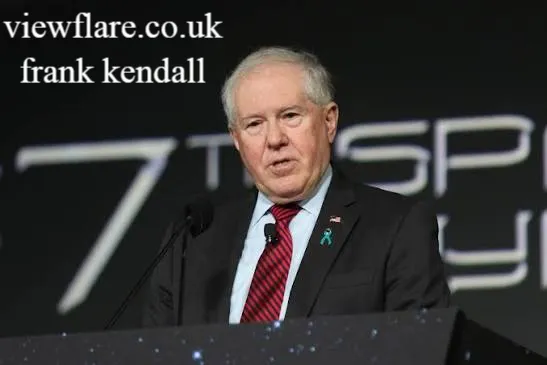
When you think about who has shaped the direction of American airpower and space defense in recent years, one name rises to the top with consistent force: Frank Kendall. He is not a household name in the way that politicians often are, but inside the world of national security, few people have carried as much influence for as long as he has.
Frank Kendall served as the 26th Secretary of the Air Force from 2021 to 2025 under President Joe Biden. He came into that role with over 50 years of combined experience in engineering, military service, government policy, and private industry. That depth of experience made him one of the most qualified people to ever hold that office.
In this article, you will learn who Frank Kendall is, what shaped his career, what he accomplished during his time leading the Air Force and Space Force, and why his legacy in U.S. defense matters. Whether you are researching him for the first time or looking to understand his real impact, this guide covers it all.
Who Is Frank Kendall?
Frank Kendall III was born on January 26, 1949, in Pittsfield, Massachusetts. He is an American engineer, lawyer, and defense executive who built one of the most distinguished careers in national security over more than five decades.
He is not someone who followed a simple, straight line to the top. His path is a rare combination of military service, technical expertise, legal training, and government leadership. He served as an Army officer. He worked as an engineer. He became a lawyer. He advised defense companies. And then he returned to government to lead one of the most critical departments in the U.S. military.
That kind of range is uncommon. It is also exactly what made him effective.
Frank Kendall’s Education and Early Career
Frank Kendall’s foundation is impressive by any measure. He earned his undergraduate degree from the U.S. Military Academy at West Point, graduating in 1971 as a Distinguished Graduate. From there, he pursued advanced education that covered multiple disciplines.
His degrees include: source: LinkedIn · Frank Kendall
- A Master of Science from the California Institute of Technology
- A Master of Business Administration from Long Island University
- A Juris Doctor from Georgetown University
That combination of engineering, business, and law gave him a perspective that most defense officials simply do not have. He could understand the technical side of weapons systems, the financial side of defense budgets, and the legal and policy side of national security all at once.
After West Point, Kendall served as an active duty Army officer for 11 years. His assignments included postings in Germany and teaching engineering at West Point itself. He eventually retired from the Army Reserve at the rank of lieutenant colonel.
From Military to Civil Service to Industry
After his military career, Kendall transitioned into civil service. He joined the Department of Defense as a systems engineer working in missile defense. In 1986, he moved up to become the Assistant Deputy Under Secretary for Strategic Defense Systems, a senior position within the Office of the Secretary of Defense.
He later moved into the private sector. He served as Vice President of Engineering at Raytheon Company, one of the largest defense contractors in the world. In that role, he oversaw engineering functions and internal research and development across the company. He also worked as a Managing Partner at Renaissance Strategic Advisors, a Virginia based aerospace and defense consulting firm.
This experience on both sides of the government and industry relationship gave Kendall a complete picture of how defense acquisition works, and more importantly, where it often goes wrong.
Under Secretary of Defense: The Obama Years
One of the most formative chapters in Frank Kendall‘s career came when President Barack Obama appointed him as Under Secretary of Defense for Acquisition, Technology and Logistics. He held this position from 2011 to 2017, serving for six years through two presidential terms.
This is one of the most powerful acquisition roles in the entire U.S. government. The Under Secretary of Defense for Acquisition oversees how the Department of Defense buys weapons systems, manages technology development, and handles the massive procurement process that keeps the military equipped.
During this period, Kendall became widely known for his focus on accountability in defense programs. He was involved in major decisions around programs like the F-35 Joint Strike Fighter, one of the most complex and expensive weapons programs in military history. His work in this role earned him a reputation as someone who asked hard questions and demanded results rather than simply approving spending.
He also served on the Army Science Board and the Defense Intelligence Agency Science and Technology Advisory Board. Additionally, he worked as a consultant to the Defense Science Board, further cementing his role as a central figure in U.S. defense thinking.
Frank Kendall as Secretary of the Air Force
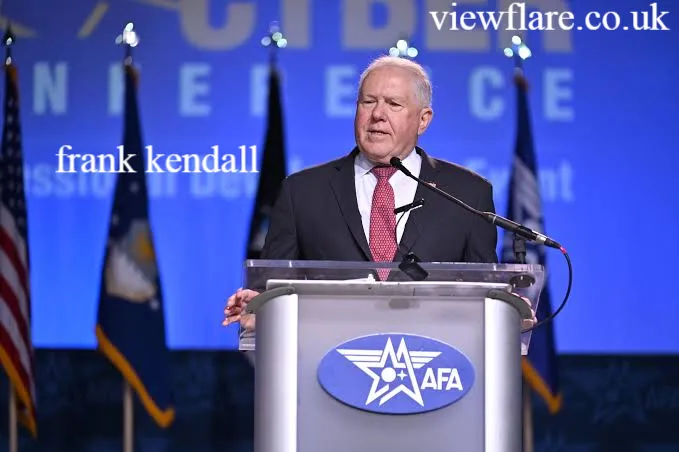
Frank Kendall was confirmed by the U.S. Senate and sworn in as the 26th Secretary of the Air Force on July 28, 2021. He served in that position until January 20, 2025, when the Biden administration concluded.
As Secretary of the Air Force, Kendall was responsible for organizing, training, and equipping both the U.S. Air Force and the U.S. Space Force. That is a massive responsibility by any standard.
He oversaw an annual budget that exceeded $173 billion at its peak and grew to over $200 billion during his tenure. He was accountable for nearly 700,000 active duty personnel, Guard members, Reserve members, civilian employees, and their families. That is a workforce larger than most major corporations in the world.
Frank Kendall’s Seven Operational Imperatives
One of Kendall’s most defining contributions as Secretary was the introduction of what he called the seven operational imperatives. These were a clear framework for what the Department of the Air Force needed to accomplish to remain competitive and ready.
The imperatives focused on areas including: source: The Roosevelt Group
- Resilient space capabilities and satellite architecture
- A new missile warning and tracking system to address hypersonic threats
- Next generation command, control, and battle management systems
- The Next Generation Air Dominance program for a sixth generation fighter aircraft
- Advanced long range strike capability through the B-21 Raider bomber
- Improved forward tactical air resilience
- Cybersecurity across logistics, supply chains, and base infrastructure
This framework gave the entire department a shared sense of direction. It replaced vague priorities with specific, measurable goals tied directly to the threat environment Kendall believed was most urgent.
The China Focus: Frank Kendall’s Central Warning
If there is one defining theme that ran through Frank Kendall’s tenure, it is his urgent and consistent focus on China as the primary strategic threat to the United States.
Kendall was direct and public about this in a way that was unusual for senior defense officials. He stated clearly that China was not a future threat but a present one. He pushed his entire department to center their planning, budgeting, and training around the possibility of a conflict with China or Russia.
He even had staff at Air Force headquarters place stickers on their computers with a reminder that war with China or Russia was not unlikely and could happen at any time. That kind of culture shift, making urgency personal and visible, was a signature of his leadership style.
He pointed to China’s rapid military modernization, its growing nuclear capabilities, and its investments in cyber and space operations as reasons the U.S. Air Force and Space Force needed to move faster and think differently. His keynote addresses at major defense conferences consistently returned to this theme, and he pushed for budget increases and structural reforms to match the scale of the challenge.
Key Achievements During His Tenure
During his time as Secretary, Frank Kendall secured meaningful progress on several fronts:
The B-21 Raider stealth bomber moved from development into delivery. This long range strike aircraft is designed to eventually replace the aging B-1 and B-2 bombers. Kendall designated Ellsworth Air Force Base, Whiteman Air Force Base, and Dyess Air Force Base as initial delivery locations.
He secured tens of billions of dollars in increased funding for the Department of the Air Force. He advanced the development of the Next Generation Air Dominance program, the planned sixth generation fighter that would give the U.S. a decisive edge in future air combat.
He initiated a new missile warning and tracking architecture capable of addressing the full spectrum of missile threats, including hypersonic weapons. He also pushed forward the creation of a new Space Force nuclear wing at Offutt Air Force Base in Nebraska.
Beyond programs and budgets, Kendall consistently advocated for workforce quality and readiness. He saw the people of the Air and Space Forces as the foundation of everything else the department could accomplish.
Frank Kendall’s Legacy in U.S. Defense
Looking back at his career, Frank Kendall leaves behind a record that spans five decades and touches nearly every major dimension of American defense. He served in uniform. He shaped acquisition policy. He led a major defense contractor. He returned to government to run one of the largest military departments in the world.
What makes his legacy distinctive is not just what he built but the mindset he brought to it. He consistently demanded accountability, pushed for modernization, and tried to make the threats facing the United States feel real and immediate to everyone around him.
His critics argued at times that some of his ambitious programs faced delays or cost risks. But even those who disagreed with specific decisions tend to acknowledge that Kendall brought seriousness and depth to a role that demands both.
FAQ Section
Who is Frank Kendall? Frank Kendall III is an American engineer, lawyer, and defense executive. He served as the 26th Secretary of the Air Force from 2021 to 2025 under President Joe Biden.
When was Frank Kendall Secretary of the Air Force? He was confirmed and sworn in on July 28, 2021, and served until January 20, 2025.
What did Frank Kendall do as Secretary of the Air Force? He oversaw a budget exceeding $200 billion, managed nearly 700,000 personnel, advanced the B-21 Raider program, pushed for sixth generation fighter development, and restructured the department to focus on great power competition with China.
What is Frank Kendall known for? He is known for his deep expertise in defense acquisition, his sharp focus on China as a strategic threat, his seven operational imperatives framework, and his long career spanning military service, industry, and government.
What was Frank Kendall’s role before the Air Force? He served as the Under Secretary of Defense for Acquisition, Technology and Logistics under President Obama from 2011 to 2017, and earlier as a U.S. Army officer and defense industry executive.
Where did Frank Kendall go to school? He graduated from West Point in 1971 as a Distinguished Graduate. He later earned a Master of Science from Caltech, an MBA from Long Island University, and a law degree from Georgetown University.
Did Frank Kendall serve in the military? Yes. He served as an active duty Army officer for 11 years and retired from the Army Reserve as a lieutenant colonel.
What is the B-21 Raider and how is it connected to Frank Kendall? The B-21 Raider is a next generation stealth bomber. Kendall oversaw its progression from development into delivery and designated the first Air Force bases to receive the aircraft during his tenure.
What were Frank Kendall’s seven operational imperatives? They were a strategic framework he created to guide the Department of the Air Force, covering space resilience, missile defense, air dominance, long range strike, battle management, forward air resilience, and cybersecurity.
Is Frank Kendall still active in defense policy? After leaving as Secretary in January 2025, he joined the Center for American Progress as a senior fellow and remains a board member of the Air and Space Forces Association.
Conclusion
Frank Kendall spent more than five decades making the U.S. military more effective, more modern, and more honest with itself about the threats it faces. His career is a case study in what it looks like when deep expertise meets genuine commitment to national security.
From the classrooms of West Point to the halls of the Pentagon, from Raytheon boardrooms to Senate confirmation hearings, he brought the same level of seriousness and technical rigor wherever he went. His years leading the Air Force and Space Force came at one of the most challenging moments in modern defense history, with China modernizing rapidly and space becoming a contested domain for the first time.
Whether you agree with every decision he made or not, understanding Frank Kendall means understanding a great deal about how the United States thinks about airpower, space, and great power competition in the 21st century.
What aspect of his career do you find most significant? Share this article with someone who wants to understand modern U.S. defense leadership.
Author Bio: Marcus A. Thornton is a national security writer and defense policy analyst with over a decade of experience covering U.S. military affairs, government leadership, and strategic competition. He has written extensively on defense acquisition, air and space forces, and the evolving U.S. China rivalry. His work appears in policy journals and digital publications focused on geopolitics and military affairs. Marcus holds a degree in political science with a concentration in international security studies.
email: johanharwen@314gmail.com
Author Name: Marcus A. Thornton
